
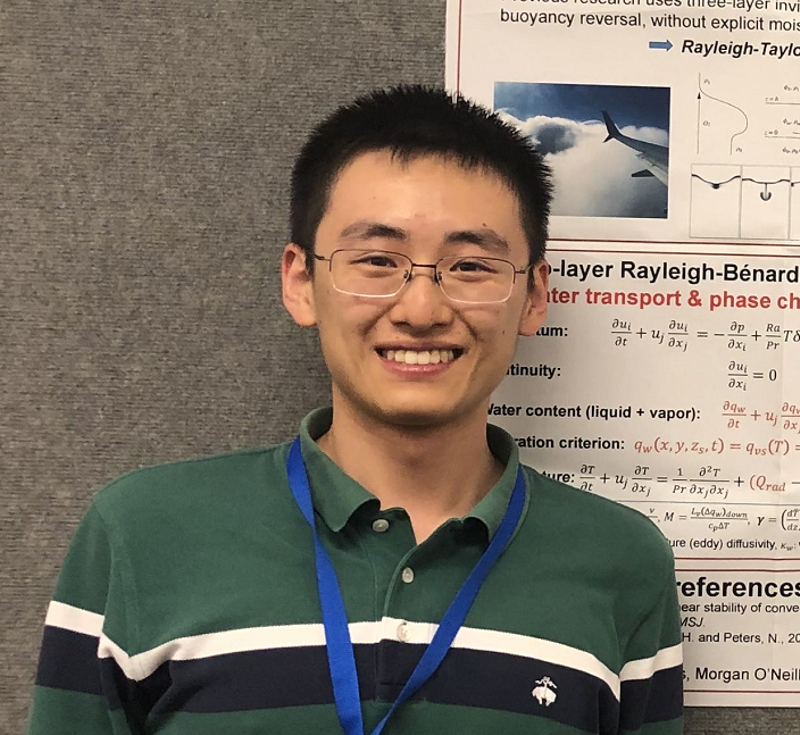
傅豪
准聘副教授,国家级青年人才
邮箱: haofu@nju.edu.cn
办公室: 大气楼C512
个人简介
傅豪博士的研究方向是大气对流、涡旋与波动理论。一方面,他重视运用统计物理、随机过程等数学物理方法研究不同尺度大气运动的相互作用;另一方面,他热爱设计流体实验装置,注重从实验室类比中获得灵感。他本科毕业于南京大学,硕士就读于中科院大气物理研究所,博士毕业于美国斯坦福大学。曾获斯坦福大学地球系统科学学术成就奖、伍兹霍尔海洋研究所地球流体力学奖学金(WHOI GFD Fellowship)、芝加哥大学T. C. Chamberlin博士后奖学金、谢义炳青年科技奖。他的主要学术贡献是建立了台风胚胎涡旋发展的多尺度理论模型,以及设计了沸腾分层流装置用于在实验室模拟积云。他还独立开发了基于涡方法的滞弹性流体模拟动力框架-VDNS,用作连接流体实验和大气现象的桥梁。
在教学方面,他负责运行地球流体力学实验室(大气楼C512)。该实验室最初由他在读本科期间和同学一起建立,毕业十年后又回到了这里。现拥有自主研发的旋转水槽、波动水槽、层结水槽、对流水槽等系列装置。欢迎对大气动力学理论和流体力学感兴趣的同学加入实验室,既可以来读研究生,也可以做小项目,偶尔来玩也可以。
流体实验资料集已发布,欢迎下载使用!
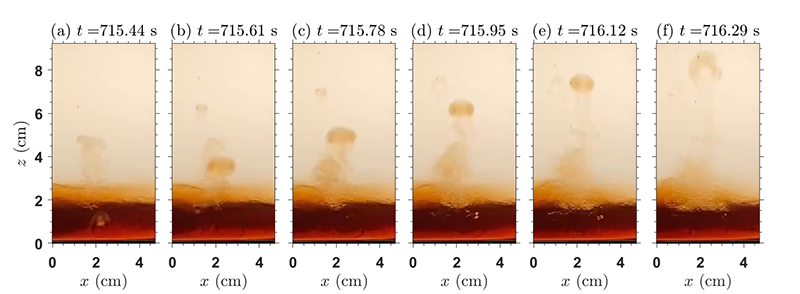 用沸腾分层流(上层清水、下层糖浆)模拟积云 video
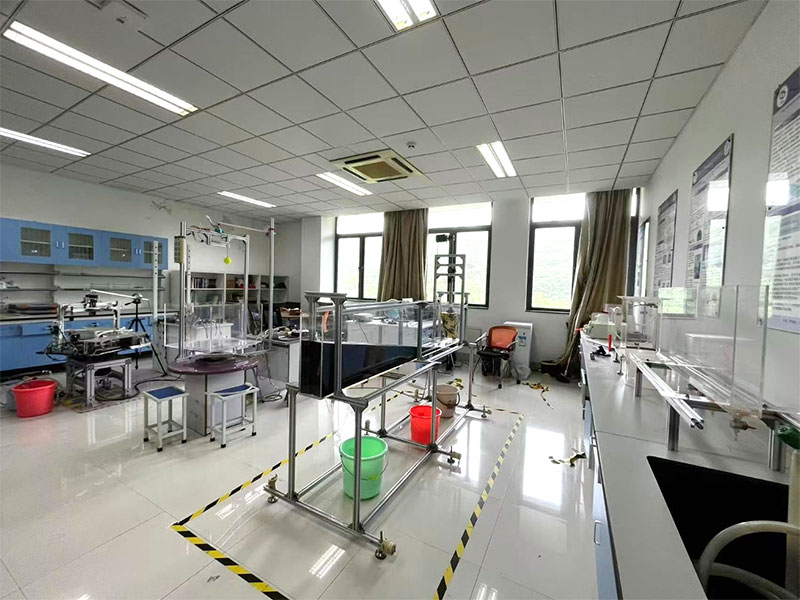 地球流体力学实验室(大气楼C512)
教育经历
| 2018-2023 | 美国斯坦福大学,地球系统科学,博士;导师:Morgan O'Neill |
| 2015-2018 | 中国科学院大气物理研究所,地球流体力学,研究生;导师:林一骅研究员 |
| 2011-2015 | 南京大学,大气科学,学士;导师:王元教授、周博闻教授 |
工作经历
| 2025- | 南京大学,准聘副教授 |
| 2023-2025 | 美国芝加哥大学,T. C. Chamberlin博士后研究员;合作导师:Da Yang,Noboru Nakamura |
| 2023 | 美国Woods Hole Oceanographic Institution,Fellow of GFD Program |
承担课程
2025-2026 夏 《大气科学综合实验(上)》,本科核心课程,
2026 秋 《高等地球流体力学》,本研贯通课,
2026 夏 《大气科学探索实验》,专业选修课.
学生获奖
2026年:
•大四樊瑾奕、刘怡志《剪切不稳定的实验和模拟研究:层结、地转与多相过程》获校级优秀毕设团队;
•大三汪旭、刘恩泽《斜压不稳定实验装置及两层准地转模式开发》获全国动力气象学术会议最佳青年墙报奖;
•大三白玉琦、张明劼《小型化水槽中风-浪-流相互作用的实验观测与数值模拟研究》获南大基础学科论坛二等奖;
•大三阮渝航《耦合准随机对流的极涡生成浅水模型》获南大基础学科论坛二等奖、全国行星科学大会“优秀论文奖”;
•大一宋彭生《多涡旋系统的可预测性演示》获南大基础学科论坛三等奖。
论文发表
| 14. | Fu, H., (2026). How do cold pools influence the size of tropical cyclone embryos? J. Atmos. Sci., 83, 1541–1565. doi: 10.1175/JAS-D-25-0165.1 |
| 13. | Fu, H., & Yang, D. (2026). Cloud sync in response to wave-like large-scale forcings. J. Atmos. Sci., 83(4), 429-452. doi:10.1175/JAS-D-24-0256.1 |
| 12. | Fu, H. & O'Neill, M. (2025). A quasi-2D model of convectively coupled vortices. J. Atmos. Sci., 82, 1317-1340. doi:10.1175/JAS-D-24-0155.1 |
| 11. | Fu, H., Cenedese, C., Lefauve, A., & Vallis, G. (2025). A laboratory analogy for mixing by shallow cumulus convection. J. Fluid Mech., 1011, A35. doi:10.1017/jfm.2025.173 |
| 10. | Fu, H. & Davis, C. (2025). The role of momentum transfer in tropical cyclogenesis: insights from a single-column model. J. Atmos. Sci., doi:10.1175/JAS-D-24-0069.1 |
| 9. | Fu, H. & O'Neill, M. (2025). Mean cold pool size of quasi-equilibrium convection. Part I: Why do cold pools collide? J. Atmos. Sci., 82(2):237-250. doi:10.1175/JAS-D-23-0143.1 |
| 8. | Fu, H. & O'Neill, M. (2025). Mean cold pool size of quasi-equilibrium convection. Part II: The survival competition hypothesis. J. Atmos. Sci., 82(2):251-265. doi:10.1175/JAS-D-24-0052.1 |
| 7. | Fu, H. & Sun, S. (2024). Vorticity skewness of finite-amplitude rapidly rotating Rayleigh-Bénard convection. J. Fluid Mech., 997, A3. doi:10.1017/jfm.2024.571 |
| 6. | Fu, H. & O'Neill, M. (2024). The small-amplitude dynamics of spontaneous tropical cyclogenesis. Part I: Experiments with amplified longwave radiative feedback. J. Atmos. Sci., 81(2):381-399. doi:10.1175/JAS-D-23-0170.1 |
| 5. | Fu, H. & O'Neill, M. (2024). The small-amplitude dynamics of spontaneous tropical cyclogenesis. Part II: Linear stability analysis. J. Atmos. Sci., doi:10.1175/JAS-D-24-0032.1 |
| 4. | Fu, H. & O'Neill, M. (2024). The stochastic spin-up of vorticity in spontaneous tropical cyclogenesis. J. Atmos. Sci., 81(5):855-870. doi:10.1175/JAS-D-23-0186.1 |
| 3. | Fu, H. & O'Neill, M. (2021). The role of random vorticity stretching in tropical depression genesis. J. Atmos. Sci., 78(12):4143-4168. doi:10.1175/JAS-D-21-0087.1 |
| 2. | Fu, H. (2021). A linear stability analysis of two-layer moist convection with a saturation interface. J. Fluid Mech., 928, A13. doi:10.1017/jfm.2021.784 |
| 1. | Fu, H. & Lin, Y. (2019). A kinematic model for understanding rain formation efficiency of a convective cell. J. Adv. Model. Earth Syst., 11(12):4395-4422. doi:10.1029/2019MS001707 |
在投论文
| 1. | Fu, H. Barotropic vorticity development due to periodic convective activity. Under review in J. Atmos. Sci. |
| 2. | Fu, H. A rotating plume model for steady-state tropical cyclones. Under review in J. Atmos. Sci. |
| 3. | Fu, H. and Yang, D. Regimes of convective response to large-scale forcings. Under review in J. Atmos. Sci. |